Why Termites Are Such a Serious Threat in Mobile, AL
Mobile, Alabama sits squarely in the heart of the Gulf Coast termite belt. The combination of warm temperatures, moisture-rich soil, and abundant wood construction materials makes our city one of the most termite-prone markets in the entire United States. Subterranean termites — particularly the Eastern subterranean termite and the invasive Formosan termite — operate silently inside walls, floors, and foundations for months or even years before most homeowners ever notice a problem.
By the time visible damage appears, a mature colony may have already compromised structural framing, floor joists, or crawl space supports. That's why knowing the early warning signs and acting quickly is so important for anyone who owns property in Mobile. If you live in neighborhoods like Midtown Mobile, Spring Hill, or Whistler, where older housing stock and mature tree canopies are common, the risk is especially high.
Sign #1: Mud Tubes on Your Foundation or Walls
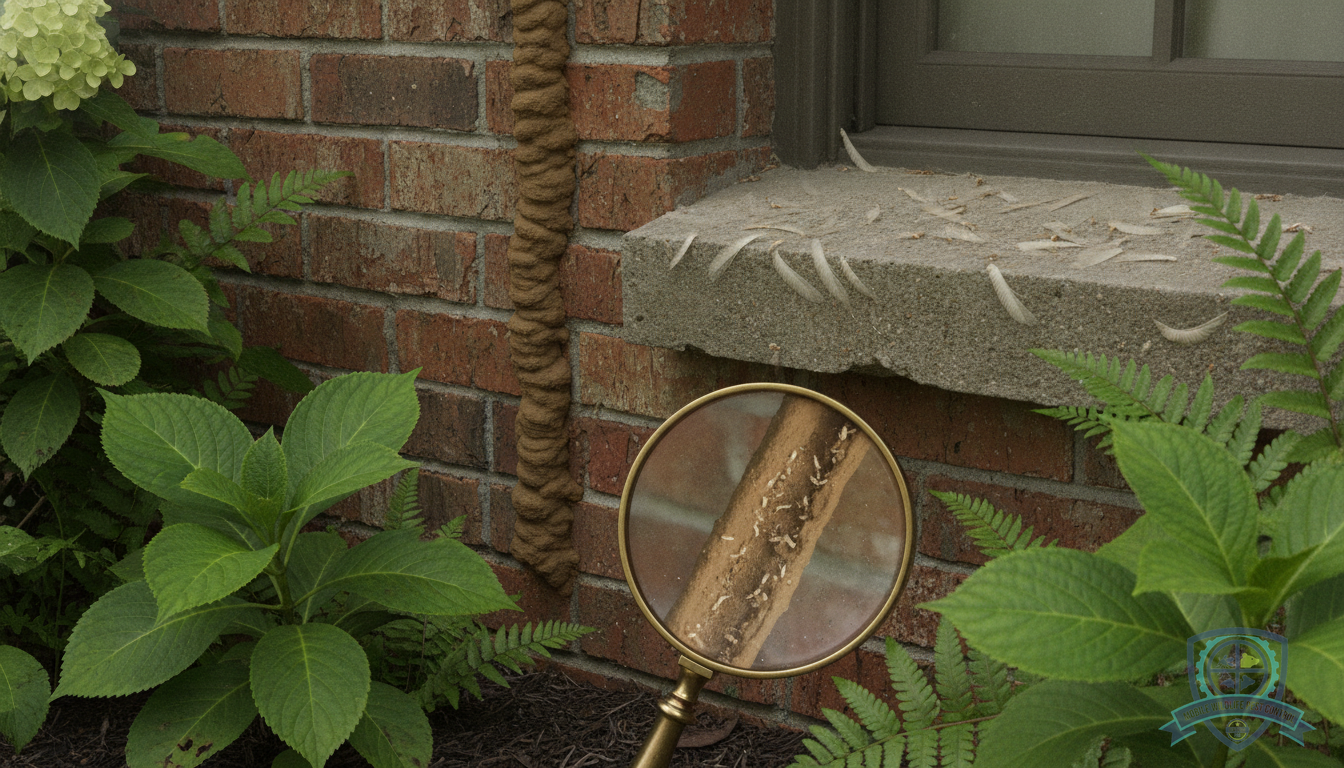
Subterranean termites do not travel through open air — they build pencil-width mud tubes out of soil, wood particles, and saliva to protect themselves from light and low humidity as they move between the soil and their food source. These tubes typically run up concrete block foundations, brick piers, and interior crawl space walls.
If you spot a muddy tube running vertically up your foundation — even a small, partial one — treat it as a serious red flag. Break open the tube and check whether it's active. Live termites will repair the tube within a day or two. Either way, call a professional immediately.
Sign #2: Hollow-Sounding or Blistered Wood
Termites consume wood from the inside out, leaving only a thin outer shell intact. Tap wooden baseboards, door frames, window sills, or structural beams with your knuckle. A hollow, papery sound where you'd expect solid wood is a classic indicator of termite tunneling beneath the surface.
Similarly, paint that appears to bubble or blister on wood surfaces — especially without any nearby moisture source — can signal that termites are active just below the paint layer. This often appears first on window frames and door casings.
Sign #3: Discarded Wings Near Windows and Doors
Each spring and sometimes in fall, termite colonies produce winged reproductive adults called swarmers whose job is to leave the colony, mate, and start new colonies nearby. After swarming, these alates shed their wings. Finding small, equal-length wings in piles on windowsills, door thresholds, or around exterior lights almost always means a termite colony is established on or very close to your property.
Don't confuse termite swarmers with flying ants — termites have straight antennae, equal-length wings, and a thick waist, while ants have elbowed antennae, unequal wings, and a pinched waist. If you're unsure, save a sample and let our technicians identify it during your inspection.
Sign #4: Tight-Fitting Doors and Windows
As termites tunnel through wood framing around door and window openings, the moisture they produce and the structural damage they cause can warp the surrounding wood. If interior doors or windows that previously operated smoothly have started sticking or binding for no apparent reason — especially during dry weather when humidity-related swelling is unlikely — hidden termite activity could be the culprit.
This sign is easy to overlook or attribute to seasonal settling, which is exactly why annual professional inspections matter so much for Mobile homeowners.
Sign #5: Visible Termite Damage to Wood Structures
In advanced infestations, you may find wood that appears layered or has a honeycomb interior pattern when broken open. This damage is frequently discovered during renovation projects, crawl space inspections, or after a flood event exposes structural framing. Wood-to-soil contact points — posts sitting directly on soil, deck supports, or landscape timbers — are particularly vulnerable and worth inspecting regularly.
What to Do If You Notice Any of These Warning Signs
If you observe one or more of these signs in your Mobile home, the most important step is to schedule a professional termite inspection as soon as possible. Do not disturb mud tubes, apply store-bought products to the area, or attempt to repair the damage before an inspector can document the extent of the infestation — any of these actions can complicate the treatment process.
Mobile Wildlife Pest Control offers comprehensive termite treatment services including liquid soil barrier applications and in-ground bait station monitoring systems. Our inspectors examine crawl spaces, slab penetrations, wood-to-soil contact points, and pier foundations to give you a complete picture of your home's termite risk before recommending a treatment plan.
We also encourage homeowners to pair termite protection with a broader residential pest control plan that addresses roaches, ants, and other common Mobile pests throughout the year. For homeowners in high-risk areas like Toulminville or Prichard with older housing stock, staying proactive is the single most effective way to avoid costly structural repairs.
Termite Treatment Options for Mobile Homeowners
- Liquid soil barrier: Termiticide is injected into the soil around your foundation, creating a continuous chemical zone that kills termites passing through it. Effective for five or more years when properly applied.
- Bait station monitoring: In-ground stations placed around the property intercept foraging workers who carry slow-acting bait back to the colony, eventually eliminating the queen and collapsing the colony.
- Combined approach: Many Mobile homes benefit from using both methods together for maximum protection, especially properties with complex foundations or prior infestation history.
Annual inspections after initial treatment allow us to monitor bait station activity, confirm barrier integrity, and catch any new activity before it has a chance to progress. We also provide written documentation of each inspection and treatment — valuable for real estate transactions and insurance purposes.
Schedule Your Mobile, AL Termite Inspection Today
Don't wait for visible damage before taking action. Mobile Wildlife Pest Control serves homeowners across Mobile and surrounding communities including Spring Hill, Midtown Mobile, and Chickasaw. Call us at +1 (251) 292-8884 or email [email protected] to book your inspection. We're available Monday through Sunday, 8:00 AM to 6:00 PM.
Discuss This With Our Team
Call +12512928884 or fill out our online form for a free, no-obligation quote.
Request Free Quote